


Style · June 11
Tailored or Industrial Shirt? The Difference Is Immediate
Slip on a genuinely tailored shirt and the verdict arrives before you have fastened the second button. The collar settles against the neck as if it had been waiting for you; the shoulder seam falls precisely where the shoulder ends; the cloth has weight and intention. An industrial shirt, however handsome on the hanger, announces its compromises the moment it meets the body. The question of a tailored or industrial shirt is rarely a matter of debate once both are worn back to back — the difference is immediate, and it lives in three places: the collar, the stitching, and the fit.
This is the quiet argument made by every Neapolitan workroom, and nowhere more eloquently than at Kiton, where a single shirt can pass through dozens of hands before it is folded. Below, we take that argument apart thread by thread, then place four shirts side by side so you can read the craftsmanship for yourself. You will also find references throughout to the wider world of Italian luxury menswear, because a great shirt never lives alone in a wardrobe.
“An industrial shirt is built to be sold. A tailored shirt is built to be worn — and the body knows the difference instantly.”
Explore the full tailored collection
Key Takeaways
| Element | What sets the tailored shirt apart |
|---|---|
| Collar | Hand-shaped, lightly fused or unlined, holding a soft roll that frames the face without stiffness. |
| Stitching | Dense, fine stitch counts and hand-finished side seams that follow the body rather than fight it. |
| Fit | Cut to the shoulder line, with a sleeve set by hand so the arm moves freely. |
| Cloth | Long-staple cottons and pure linens chosen for hand and longevity, not for speed of production. |
| Lifespan | Years of laundering with collar and cuffs that keep their shape — an investment, not a season. |
The Collar Tells the Truth First
Look at the collar before anything else. On an industrial shirt the collar is usually heavily fused — two layers of cloth glued to a stiff interlining for cheapness and uniformity. It sits flat, slightly lifeless, and over time the glue bubbles after repeated washing. A tailored collar is a different creature entirely. It is shaped to carry a soft, natural roll, often with a lighter fusing or none at all, so that it curves gently around the neck and rises just enough to support a tie or fall cleanly when worn open.
That roll is the signature of a shirt made by people who expect it to be looked at closely. It is the same instinct you find across the house's luxury menswear: an obsession with the part of the garment that sits nearest the face. Get the collar right and the whole shirt reads as considered.
Did You Know
A single Kiton shirt can require more than two hours of handwork, with the collar and sleeve attached by hand to preserve their soft roll. Industrial production typically allots a few minutes per shirt — the reason the contrast registers the instant you put one on.
Stitching: Where Speed Betrays the Garment
Run your fingertips along the side seam. An industrial shirt is overlocked at high speed — fast, flat, and functional, with a low stitch count that puckers under tension and frays after a season of laundering. A tailored shirt is sewn with a far higher stitch density, frequently with hand-finished side seams and a single-needle finish that lies clean and flat against the skin.
The hand is where the romance hides. Hand-attached sleeves, hand-sewn buttonholes with their faint irregularity, mother-of-pearl buttons stitched with a shank wrap so they never strain the placket — these are the details that separate craftsmanship from manufacture. They are the same values that animate the brand's tailoring philosophy, and they are felt long before they are seen.
Fit Is the Final, Unforgiving Test
Cloth and stitching prepare the stage; fit delivers the performance. An industrial shirt is cut to a size chart — a compromise designed to fit the average of thousands of bodies and therefore the precise shape of none. The yoke is wide, the armhole low and roomy, the body boxy so it drapes acceptably on as many men as possible.
A tailored shirt is cut to the shoulder line, with a higher, cleaner armhole that lets the arm rise without dragging the whole shirt with it. The result is a garment that disappears when you move — no billowing, no straining, no riding up. Pair one with tailoring from the full collection and the silhouette finally resolves the way the cutter intended.
Four Shirts, Read Side by Side
To make the case concrete, Mr. Pianik places four Kiton shirts together — each one foregrounding a different facet of Neapolitan craft, from a relaxed short-sleeve cotton to the breezy structure of pure linen. Study the collars and seams across all four and the language of the tailored shirt becomes fluent.
The Comparison Edit

Blue Short-Sleeve Cotton Shirt
Lightweight cotton with a softly rolled collar that proves structure need not mean stiffness.
A study in warm-weather ease.
Shop the shirt

Pink Cotton Shirt
Long-staple cotton with single-needle seams and a hand-finished placket that lies perfectly flat.
Colour with quiet confidence.
Shop the shirt
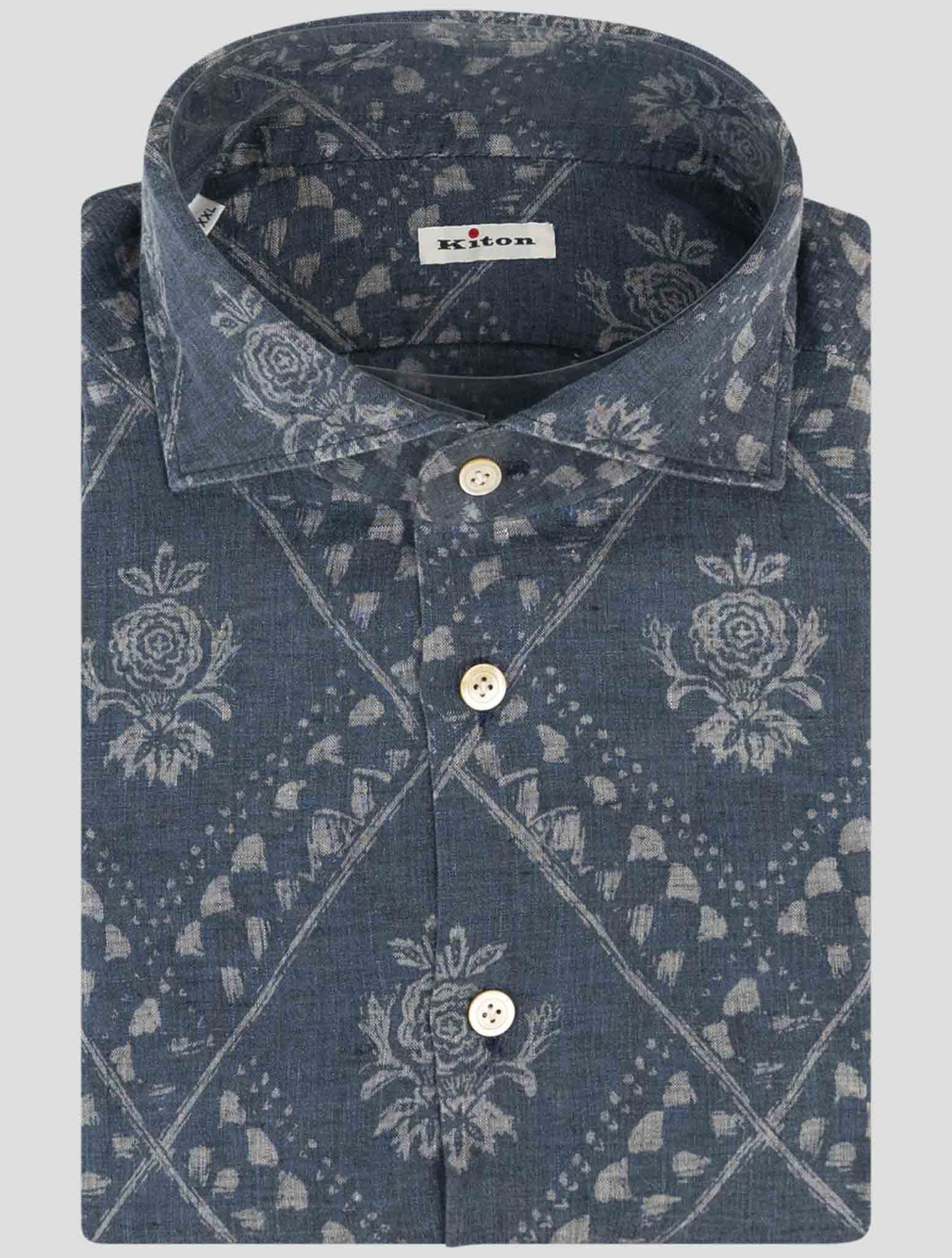
Blue Linen Shirt
Pure linen that breathes and creases with character, cut to a clean high armhole for movement.
Effortless through summer.
Shop the shirt
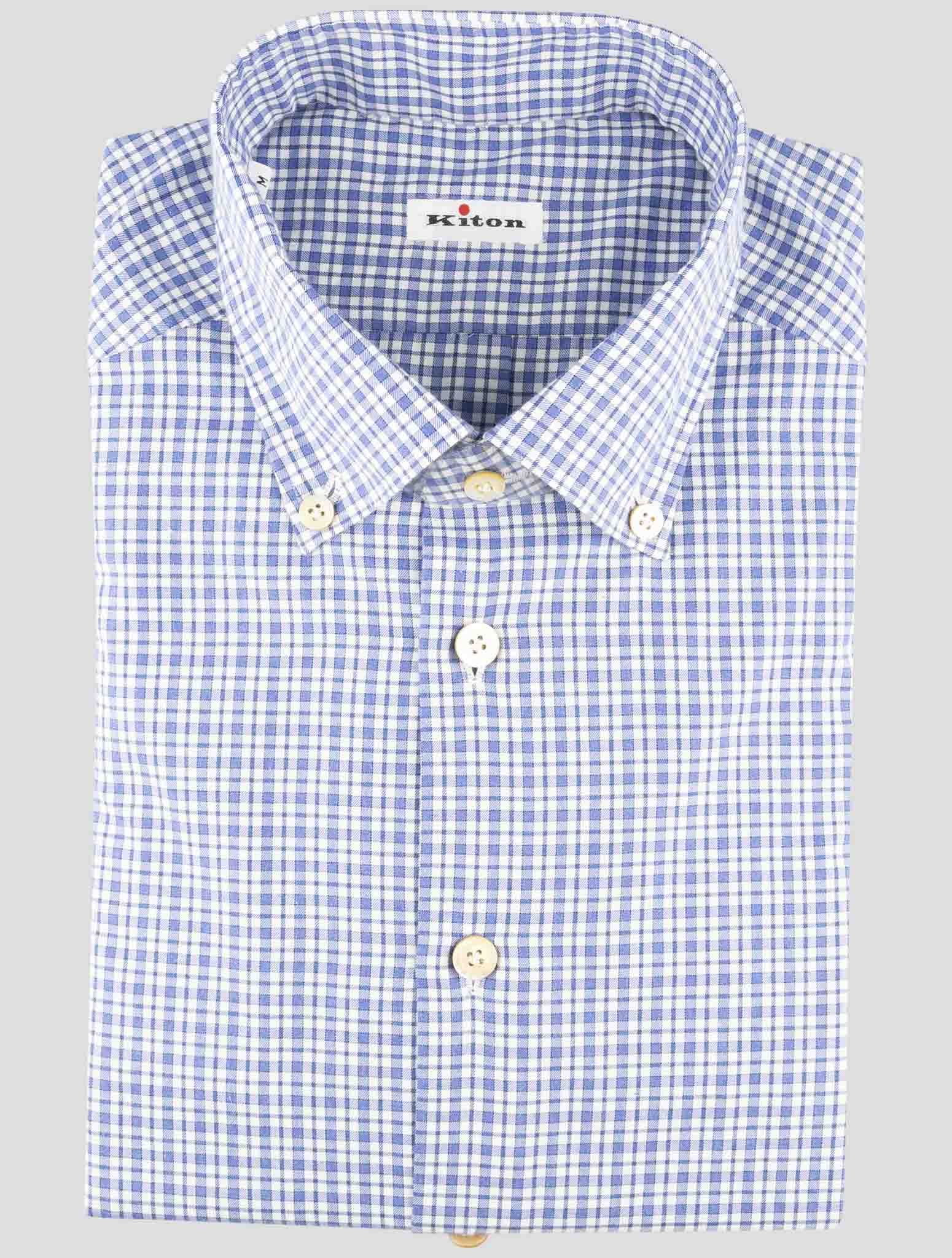
Blue & White Cotton Shirt
A crisp two-tone weave with hand-attached collar and mother-of-pearl buttons set on a shank.
The everyday classic, refined.
Shop the shirt
Four Kiton shirts, each highlighting a different aspect of Neapolitan tailoring craftsmanship.
From One Shirt to a Whole Wardrobe
The tailored shirt rewards you most when it anchors a complete look rather than standing alone. To show how, Mr. Pianik built an outfit around the light blue cotton shirt, layering it under the gray reversible cotton PA PL overcoat for a softened, architectural line.
Below the waist, the blue cotton and silk trousers carry just enough sheen to flatter the shirt's clean weave, while the dark blue leather and suede sneakers ground the look in modern ease. It is a reminder that a shirt chosen well becomes the still centre around which everything else is composed.
The Long Economics of Buying Once
There is a practical argument folded inside the romantic one. An industrial shirt is cheaper on the day you buy it and more expensive over its short life: collars curl, glue bubbles, seams fray, and within a year it is relegated to the back of the drawer. A tailored shirt costs more once and then quietly outlasts a decade of laundering, its collar holding its roll and its cloth softening rather than failing.
Seen across years rather than seasons, the tailored shirt is not the indulgence — it is the rational choice, and the same logic that draws collectors toward fully handcrafted tailoring in the first place.
Frequently Asked Questions
How can I tell a tailored shirt from an industrial one in the shop?
Start at the collar and feel for a soft, natural roll rather than a flat, stiff board. Then check the side seam for a fine single-needle finish and look at the buttons — mother-of-pearl on a stitched shank signals tailored construction.
Is a fused collar always a bad sign?
Not necessarily. The finest shirts use a light, expertly applied fusing or none at all. The problem is heavy industrial fusing, which feels rigid and tends to bubble after repeated washing.
Are linen shirts harder to wear than cotton?
Linen creases more readily, but that is part of its relaxed character. A well-cut linen shirt, like the blue linen above, breathes beautifully in heat and ages with a softness cotton cannot quite match.
How should I care for a tailored shirt?
Wash gently, avoid harsh heat, and reshape the collar by hand while damp. Treated with a little care, a tailored shirt keeps its line for years rather than seasons.